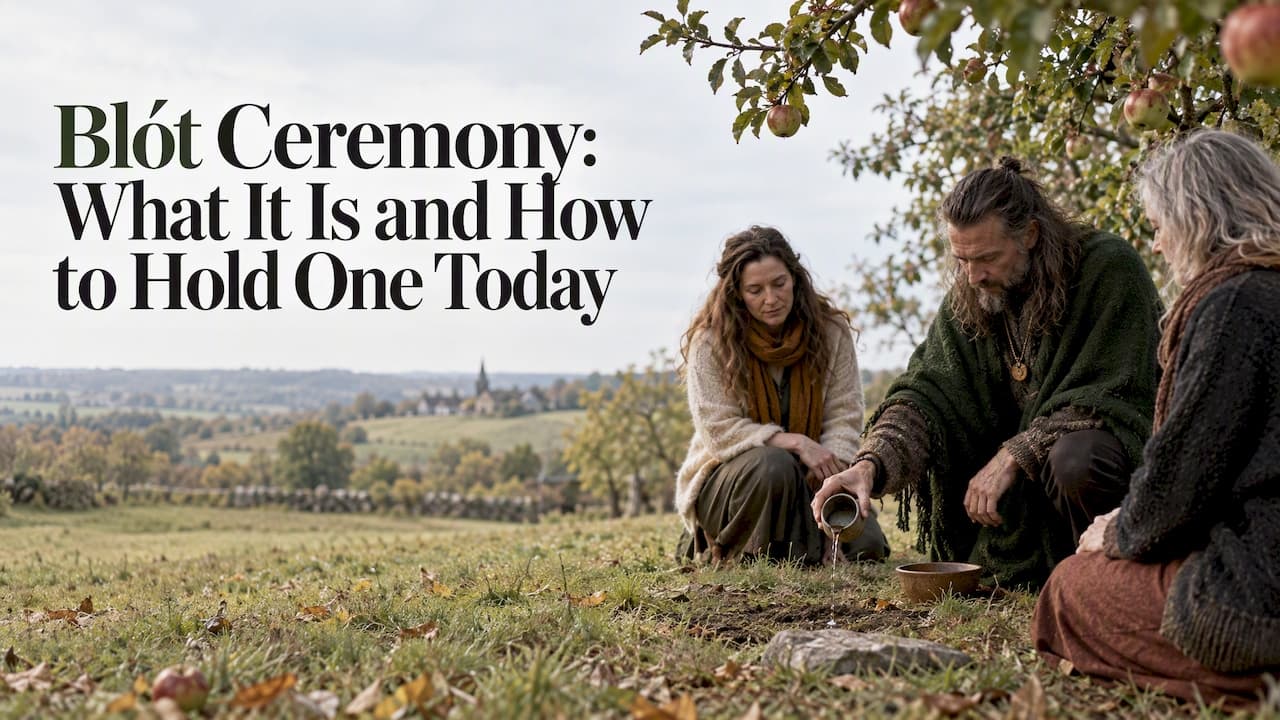
A blót (pronounced "bloat") is a Norse and Germanic offering ceremony: you give something to the gods, the land-spirits or the ancestors, and you share a meal or a drink in the same breath. Historically it involved animal sacrifice and a feast. Today it usually means a horn of mead, an altar, a few spoken words and a libation poured onto the earth. You can do it alone at a kitchen table or with a group in a field.
This guide covers what the word means, what we know and don't know about the old rite, how to hold a simple modern blót step by step, and how it fits the Norse seasonal year.
TL;DR
- A blót is a reciprocal offering rite: a gift to the gods, spirits or ancestors, usually shared with a meal and a drink.
- Ancient blóts centered on animal sacrifice and a communal feast. Modern Heathens use symbolic offerings such as mead, grain, food or handmade items.
- A basic modern blót needs a clear intention, an offering, a vessel, three toasts and a closing. It can take ten minutes.
- Our knowledge of the old rite comes mostly from later Christian-era writers, so every modern blót is a reconstruction, not a replica.
- The big seasonal blóts are Winter Nights (mid-October), Midwinter or Yule, and the summer blót in April. Their original dates were lunar, not fixed.
Table of Contents
- What a blót actually is
- What we know, and what we are reconstructing
- How a modern blót works
- The Norse seasonal year and its blóts
- Perspective: why we teach the blót as a living relationship
- Pair the blót with other practices
- Going deeper with us
- FAQ
- Sources
What a blót actually is
The word comes from Old Norse and Old English and names the religious ceremonies of Germanic paganism. Wikipedia's entry on the blót describes them as centered on killing and offering an animal to a particular being, typically followed by communal cooking and eating of the meat. The feast itself was called the blótveizla.
Three elements run through the descriptions: a sacrifice, a shared meal, and ceremonial drinking of ale or mead. The point of all three was to build a reciprocal bond between people and the divine. The phrase modern guides use is "a gift for a gift": you give, and you trust that giving keeps the relationship alive. Wyrd & Flame's practical guide lists what could be offered: blood in ancient times, mead or ale, the best cuts from a feast, crafted objects, or a simple libation poured on the ground.
That last item matters. A blót does not have to be large. The Asatru Folk Assembly's UK-based Heathen resource names blót and symbel as the two main rites of Heathenry, held at seasonal festivals and at rites of passage such as weddings and funerals.
Blót versus sumbel
People often blur the two. A blót is the offering. A sumbel (sometimes spelled symbel) is a ritual round of toasts, oaths and boasts passed around with a horn. Many modern gatherings combine them: the offering comes first, then the horn goes around. The toasts in the blót outline below borrow from the sumbel for that reason.

What we know, and what we are reconstructing
Pre-Christian Norse religion had no central organization and no scripture. What survives comes from medieval accounts, many written by Christians who may have framed the rituals through their own lens. A Wild Hunt essay on the blót makes this point, and notes that modern American Ásatrú blót often feels like a different practice from the old sacrificial feasts, centered on maintaining reciprocal relationships.
Archaeology adds some detail. A re-analysis of animal and human bones from Frösö Church in Jämtland, Sweden used radiocarbon dating to study Viking Age rituals at the site and what the blót looked like on the ground. The written sources and the bones do not always agree, which is why careful practitioners say "reconstruction" and not "tradition handed down."
The rite also had a political side. According to the Wikipedia entry above, the ruler's role in hosting the public blót was tied to political legitimacy. A blót was a religious offering and a social contract at once. That is worth remembering when someone tells you there is one correct way to do it. The old practice varied by place, season and household, and smaller family blóts, which women could lead, were common alongside the great public ones.
How a modern blót works
Modern Heathens have largely replaced animal sacrifice with symbolic offerings. Wyrd & Flame describes modern setups as an altar, a bowl or horn for the offering and sometimes a fire for outdoor rites. The ceremonies range from a solitary home ritual to an elaborate group event. Practitioners generally agree that the heart of it is balance and reciprocity with the world, the ancestors and the divine, not strict replication of the past.
Here is a plain structure you can adapt. It is not the only valid one.
What you need
- A small table or flat stone as an altar.
- A bowl for the offering and a horn or cup for the toasts.
- Mead, ale, wine, juice or water. Choose what you can share honestly. If alcohol is a problem for you, use something else.
- A second offering: a piece of bread, grain, a flower, a handmade object.
- A candle or, outdoors and where it is safe, a small fire.
The steps
- Set the intention. Decide who the blót is for and why: thanks for a harvest, honoring a grandparent, asking for help with a hard season. A vague blót tends to feel vague.
- Prepare the space. Clean it, light the candle, place the bowl and horn. Some people mark the space with a short spoken line. Others sit in silence for a minute.
- Call on the recipient. Name the god, the land-spirits or the ancestors you are addressing. Speak in your own words. Reading a short poem or prayer you wrote is fine.
- Make the offering. Pour part of the drink into the bowl and place the food or object beside it. You are giving it away, so it is not for you afterward.
- Pass the horn, three toasts. Following the sumbel pattern described in the Wyrd & Flame guide: the first toast to the gods, the second to the ancestors, the third personal, a vow, a hope or a boast. Alone, you just drink after each one.
- Share a meal if you can. The shared meal is part of the old structure. Even a slice of bread passed around counts.
- Close and return the offering. Thank the recipients. Afterward, pour the offering bowl onto the ground outside, not down the drain, or leave food for animals if it is safe for them.
A realistic first attempt
Suppose you want to mark the end of the year's work in your garden. You set a card table on the porch, pour a cup of apple cider into a bowl for the land, and place a loaf of bread beside it. You name the land and the people who lived on it before you. You toast three times: to the gods, to your grandmother, and to the thing you want to plant next spring. You eat the bread with your family and pour the rest of the cider under a tree. That is a blót.
Common mistakes
- Treating it as a performance. The ceremony is a relationship, not a script. If the words feel borrowed, shorten them.
- Claiming it is exactly how Vikings did it. The sources do not support that, and informed Heathens will say so.
- Offering what you will want back. Give something that costs you a little. That is what makes it a gift.
- Skipping the follow-through. If you vow something in the third toast, write it down and revisit it.
The Norse seasonal year and its blóts
People searching for a Norse wheel of the year often expect the eight-spoke Wiccan model. The Norse record is thinner and organized differently. The research behind this article points to three major seasonal blóts: Winter Nights in mid-October, which marked the start of the winter half-year, the great Midwinter blót (Yule) in January, and the summer blót in April.
| Blót | Approximate timing | Focus |
|---|---|---|
| Winter Nights (vetrnætr) | Mid-October | Start of winter, harvest, dísir and Freyr, ancestors |
| Midwinter / Yule (jól) | January | Midwinter feast, a good year ahead |
| Summer blót | April | Start of summer, growth and protection |
The Winter Nights article on Wikipedia says the festival period likely lasted three days, and that blóts then were often dedicated to female fertility deities (the dísir) or to Freyr to secure a good harvest. A Norse calendar compiled by Folk Realms adds that Winter Nights coincided with the end of harvest and the slaughter of livestock that could not be kept through winter, and that it was a time to honor the dead and the alfar.
Dates are lunar, not fixed
Do not pin these to December 21 or any fixed calendar date. The Wikipedia entry on the blót notes that the Yule blót originally fell around the January full moon and Winter Nights around the October full moon. A Heathen writer on the Norse-Gael blog makes the same argument: Jól is a January midwinter festival, not a solstice festival. Many modern Heathens choose a date near the old timing and some simply pick the weekend that suits the group. Both are common. If you want to follow the sun instead, our guide to solstice rituals at home is a separate, equally valid practice.
Smaller blóts through the year
The big three are only the public ones. Household blóts were common, so you do not need a festival to hold one. People mark birthdays, deaths, moves, new jobs and the start of a hard season. If you are holding a blót to honor someone who has died, our piece on why meaning matters more than frequency in grief rituals may help you decide how often and how elaborate to make it.
Perspective: why we teach the blót as a living relationship
We work with Norse and Andean traditions at Sacred Paths, and we come to the blót as practitioners, not as historians or as a Heathen kindred. That shapes what we say.
We see two ways people go wrong. Some treat the ceremony as theater: horn, beard, bold words, nothing felt. Others are so afraid of getting it wrong that they never pour the first drop. The old sources show a tradition that varied by place and household and that was most of all about keeping faith with what sustains you. That asks for sincerity more than scholarship, though a little scholarship keeps you honest.

In our own work, a ceremony lands when the offering costs something and the intention is clear. We lean on experiential learning rather than information, because a blót only teaches you something once you have stood outdoors, spoken aloud and poured a drink on the ground. As a trained veterinarian, I also look at the animal question without sentiment. Our ancestors lived close to the animals they ate, and the old rite was a way of acknowledging that debt. Today we can honor the same idea with a loaf and a cup, and with the care we give the living animals and land around us.
If you borrow from a tradition that is not your own lineage, do it with respect. Learn the sources, name where your practice comes from and avoid claiming authority you do not have. If you are connected to a Heathen community, learn from them first.
— Angell
Pair the blót with other practices
A blót works well alongside other ways of listening. Some people draw a rune before the offering to set the question, then record what happens. Our guide to drawing one rune and building a reading journal shows a simple way to start. Others sit in silence by the fire after the toasts and let whatever comes arrive without forcing it.
Going deeper with us
If you want to practice Norse ceremony inside a longer path, with mentoring and a community around you, our Sacred Paths Shamanic School offers a two-year initiatory path in Andean and Norse shamanism, through the EarthWalker and FireKeeper programs, rooted in La Ferme du Cerf Bleu in Burgundy, France. For a lighter start, our Monthly Shamanic Circle is a place to practice with others. If you would like one-on-one guidance on a specific life transition, see Shamanic & Spiritual Coaching, listed at 395 $ one-off.
FAQ
What does blót mean?
The word names the religious ceremonies of Germanic and Norse paganism, centered on offering something to a deity, land-spirit or ancestor. In the old texts the offering was typically an animal, followed by a communal meal. Today it means a symbolic offering, often mead, shared with a few words of thanks or request.
Do I need to be Heathen to hold a blót?
No rule requires it, but the rite belongs to a living religion, so approach it with respect. Learn from Heathen sources, say honestly what you are doing and why, and do not present your version as ancient or authoritative. If you want to join a group, many Heathen organizations welcome beginners.
Can I do a blót alone?
Yes. Household and individual blóts are part of the tradition, and modern guides describe simple solitary versions. Set an intention, make the offering, give three toasts, close and return the offering to the earth. The shared meal is lovely but not required.
When should I hold one?
Any time you have a reason. The traditional high points are Winter Nights in mid-October, Midwinter in January and the summer blót in April. Because those were lunar-based, a date near the full moon is as authentic as any fixed one. Life events are just as good a reason.
Is a blót the same as a sumbel?
Not quite. The blót is the offering and the shared feast. The sumbel is a ritual round of toasts and oaths with a passed horn. Modern groups often hold the two together, with the sumbel following the offering.
Sources
- Blót, Wikipedia
- Winter Nights, Wikipedia
- How to Perform a Blót: A Modern Heathen Ritual Guide, Wyrd & Flame
- To Honor the Gods, The Wild Hunt
- Rites & Celebrations, Asatru UK
- Veitstu hvé blóta skal? The Old Norse blót in the Light of Osteological Remains from Frösö Church
- Norse Calendar 2026, Folk Realms
- Jól, a January Mid-Winter Festival, The Norse-Gael Heathen